The Wild Dogs of Tadoba: The Predators That Hunt as a Team

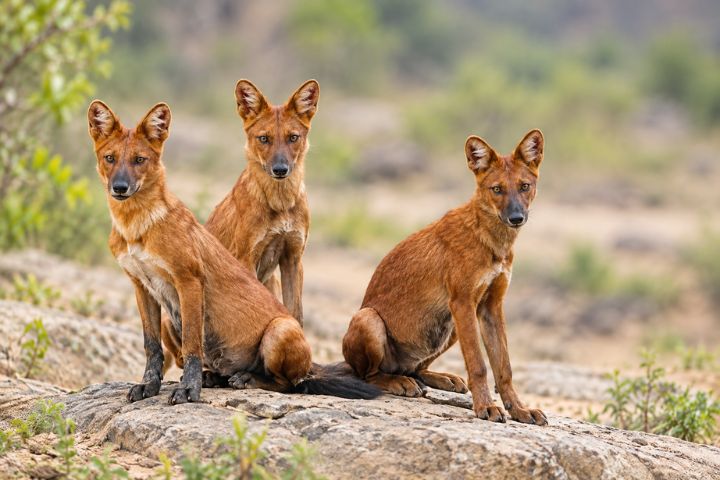
There is something remarkable about watching a pack of wild dogs move through the forests of Tadoba National Park. They are not the largest predators in the forest, and they certainly do not have the physical power of a tiger. Yet when a pack begins to hunt, size suddenly becomes less important. What matters is coordination, communication, speed, patience, and the ability to work together.
Known as dholes or Indian wild dogs, these highly social predators are among the most fascinating animals that can be encountered in the Tadoba landscape. A tiger may command attention simply by walking through the forest, but a pack of wild dogs tells a completely different story. Their hunt is a story of many individuals behaving as one.
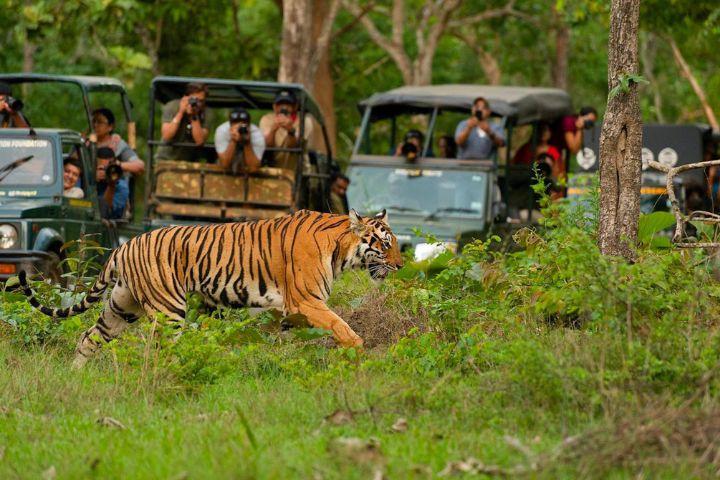
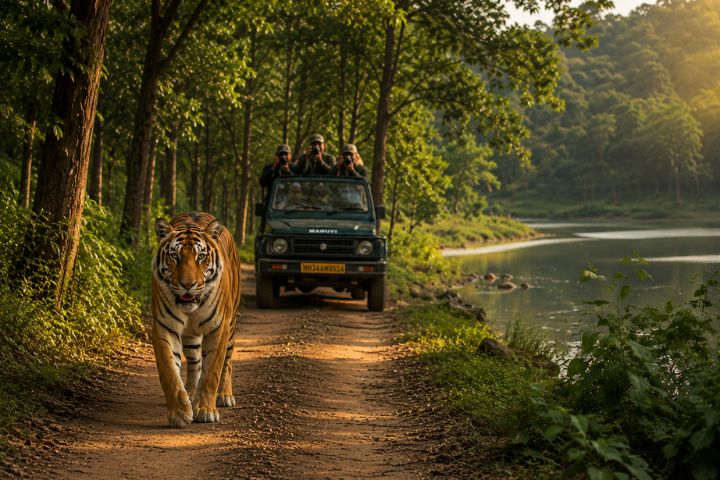
For anyone exploring Tadoba Tiger Reserve on a safari, seeing a pack of dholes can become one of those wildlife moments that stays in the memory long after the safari ends. At Jungle Bucket List, which takes clients to Tadoba National Park from Mumbai, Pune, and other locations, these are the kinds of natural encounters that make a forest experience so much more than simply looking for a tiger.
Meet the Wild Dogs of Tadoba
The wild dog, or dhole, is a medium-sized carnivore that lives and hunts in social packs. Compared with a sambar, which can weigh several times more than an individual dhole, a single wild dog appears surprisingly small. That difference in size makes their hunting strategy even more fascinating.
A dhole does not depend on the brute strength that a tiger can use to overpower prey. Instead, the pack uses numbers, movement, persistence, and coordination. When several dogs begin moving together, the forest suddenly feels very different. One animal may run from one direction while another appears somewhere else, forcing the prey to constantly react to the changing threat.
This is where the real strength of the wild dogs of Tadoba becomes visible. Their power is not concentrated in one individual; it is spread throughout the pack.
One Herd, One Target
Imagine a pack coming across a large herd of deer or sambar moving through the Tadoba forest. There may be dozens, or in some situations a much larger gathering of prey animals, moving together. The wild dogs do not need to chase every animal they see. The hunt becomes about identifying an individual that can be pursued and separated from the safety of the group.
The pack’s movement can appear almost organised. Some dogs stay close to the potential target, while others approach from different angles. The prey is constantly trying to understand where the threat is coming from, while the dogs use their numbers to keep the pressure on.
People sometimes describe the largest or most prominent male in a pack as an alpha male, but wild-dog social behaviour is more complex than a simple command structure. It is better to think of the hunt as coordinated pack behaviour, where experienced individuals and other members contribute to the pursuit rather than imagining that one dog gives every instruction.
The Hunt Begins With Teamwork
This is the moment when the size difference becomes astonishing. A sambar can be dramatically larger and stronger than an individual dhole, yet several wild dogs can work together to keep the animal moving and prevent it from finding an easy escape route.
The dogs may approach from different sides and change their positions as the prey reacts. Instead of relying on one continuous attack, the pack can maintain pressure through movement and repeated pursuit. Their speed and endurance become important because the objective is not necessarily to overpower the prey immediately.
The hunt can look chaotic if you watch only one dog. Watch the entire pack, however, and another picture begins to emerge.
The dogs are constantly responding to one another and to the movement of the prey.
How the Pack Works Together
During a coordinated hunt, several behaviours make the wild dogs particularly effective predators:
- Positioning: Different members of the pack can approach the prey from different directions, making escape more difficult.
- Pursuit: The dogs can keep following and pressuring the prey rather than depending entirely on a single attack.
- Communication: Vocalisations and body movements help maintain contact between pack members.
- Rotation: Different dogs can become involved at different moments, allowing the pack to continue the pursuit.
- Persistence: Instead of depending only on physical strength, the pack can rely on repeated effort until the prey becomes exhausted.
This is why watching a dhole hunt is so different from watching a solitary predator. The drama is not created by one powerful animal. It comes from the interaction between many smaller animals working toward the same goal.
When the Hunt Reaches the Water
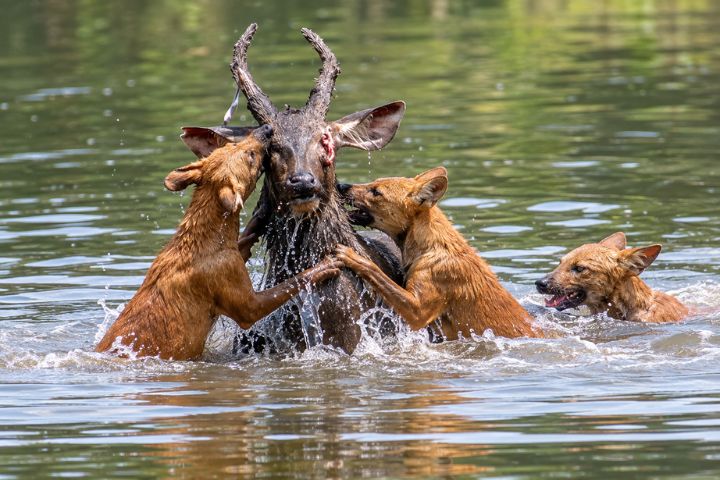
Sometimes the prey may head toward water while trying to escape. For a sambar, water can appear to offer an opportunity to slow down or create distance from predators. But the struggle does not necessarily end when the animals reach the water.
A sambar is a powerful animal, and even an exhausted prey animal can be dangerous to a much smaller predator. The dogs therefore have to remain alert and coordinated. Several members may continue the pursuit while others remain nearby, ready to respond to changes in the struggle.
The longer the chase continues, the more important endurance becomes. The prey is trying to conserve energy and escape, while the pack continues applying pressure. What looks like a sudden attack can actually be the final stage of a much longer process in which the animal has gradually become tired.
The remarkable part is that the dogs do not need to match the sambar’s strength individually. They turn collective effort into an advantage.
The Sambar’s Cry Changes Everything
A hunt in the Tadoba forest does not happen in isolation. Every sound travels through the landscape, and the distress or alarm calls of a prey animal can create another layer of tension.
A struggling sambar can make loud calls, and those sounds can potentially be heard by other animals in the surrounding forest. For a wild-dog pack, that creates an uncomfortable possibility: the hunters themselves may attract the attention of a much larger predator.
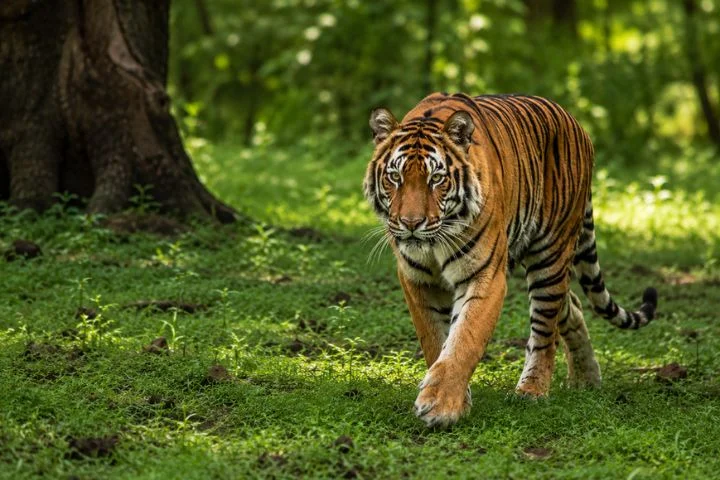
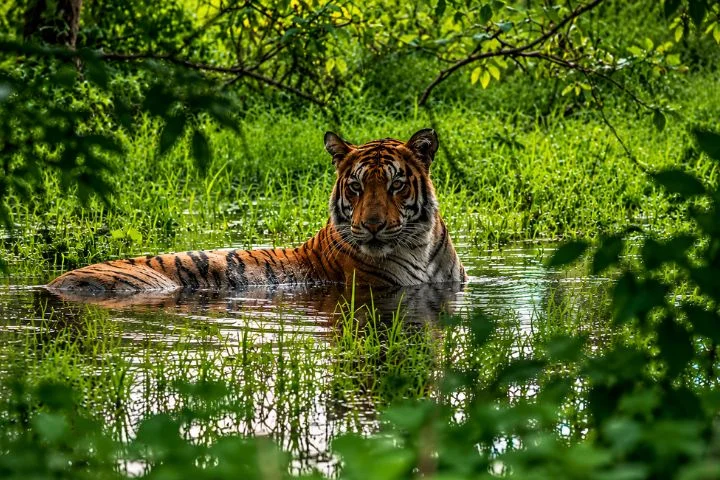
And in Tadoba, that predator could be a tiger.
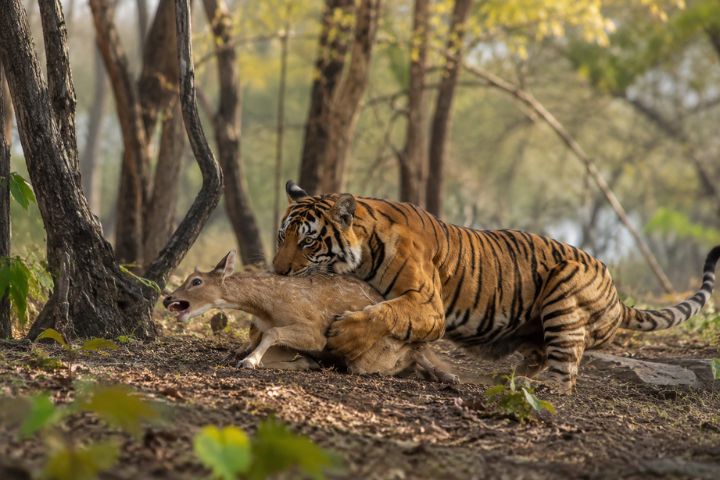
The dogs may have done the difficult work of bringing down their prey, but the story does not necessarily end there. A tiger discovering a kill can change the situation immediately because a tiger has a major size and strength advantage over an individual dhole.
This is why feeding can also involve vigilance. While some members of the pack feed, others may remain alert to what is happening around them. A successful hunt gives the pack food, but it can also create a new reason to watch the forest carefully.
A Meal Shared by the Pack
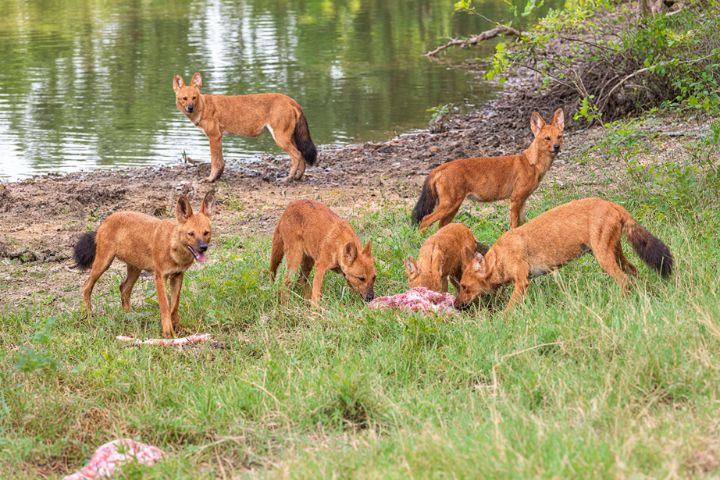
The social side of the dhole is just as fascinating as its hunting behaviour. These animals live in groups, and food obtained by the pack can become a shared resource.
The sight of several wild dogs feeding together shows another important difference between a solitary hunter and a social predator. The pack has to manage not only the hunt but also what happens afterward. Younger animals and other members of the group are part of the social structure, while the surrounding forest remains a place where danger can arrive without warning.
The dogs cannot simply forget about everything around them once they have food. A tiger, leopard, or another competitor could potentially appear, so awareness remains important even after the chase has ended.
That combination of feeding and vigilance reveals something fundamental about survival in the wild: getting food is only one part of the challenge. Keeping that food and protecting the group can be just as important.
Smaller Than the Prey, Stronger as a Team
This is what makes the wild dogs of Tadoba so fascinating. If you compare one dhole with a sambar, the difference in size immediately seems to favour the prey. The sambar is larger, heavier, and physically powerful enough to make a direct confrontation extremely risky for a single dog.
But the pack changes the equation.
The dogs use cooperation instead of relying entirely on individual strength. They move together, pursue together, respond to one another, and share the rewards of the hunt. Their success comes from the combined abilities of the group.
That is perhaps the most memorable lesson from watching a dhole pack in the wild. The forest does not always belong to the biggest animal. Sometimes survival belongs to the animal that knows how to use its strengths collectively.
Experience Tadoba’s Wild Side With Jungle Bucket List
For visitors coming from Mumbai, Pune, or other parts of Maharashtra and beyond, a trip to Tadoba National Park offers the opportunity to experience this complex wildlife ecosystem in person. Jungle Bucket List takes clients to Tadoba with the aim of creating memorable wildlife experiences, where the focus is not only on spotting a tiger but also on understanding the many species that make the forest their home.
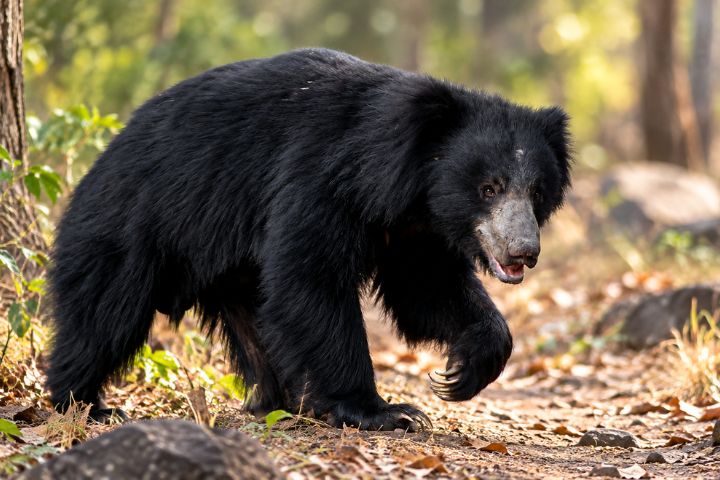
A tiger sighting may be the dream for many safari visitors, but encounters with dholes, sambar, chital, sloth bears, leopards, and other wildlife can reveal an entirely different side of Tadoba.
The next time a pack of wild dogs appears on a Tadoba safari, look beyond their size. Watch how they move, how they respond to one another, how they change direction, and how the entire group becomes involved in the hunt. What you are seeing is not simply a group of predators chasing prey. You are watching one of India’s most fascinating examples of social hunting.
And perhaps that is the greatest story of the Indian wild dog: an animal that may look small beside its prey but becomes remarkably powerful when the pack moves as one.
Frequently Asked Questions
Are there wild dogs in Tadoba National Park?
Yes, dholes, or Indian wild dogs, are part of the wildlife of Tadoba National Park. They are social carnivores that live and hunt in packs, although sightings are naturally unpredictable because they are wild animals moving through a large forest landscape.
What do the wild dogs of Tadoba eat?
Dholes prey on a variety of animals, with their diet including deer and other suitable prey. Their pack-hunting behaviour allows them to pursue animals that can be considerably larger than an individual dhole.
How do wild dogs hunt in a pack?
Wild dogs use coordinated pursuit, positioning, communication, speed, and persistence. Several members can participate in the chase while others remain nearby, allowing the pack to maintain pressure on the prey.
Are dholes dangerous to humans?
Dholes are wild predators and should always be observed responsibly from a safe distance. Safari visitors should never attempt to approach, feed, follow, or interfere with them, because respectful observation is essential for both wildlife and visitors.
Can you see wild dogs on a Tadoba safari?
Dholes can be encountered in Tadoba, but no responsible safari operator can guarantee a particular wildlife sighting. The excitement of Tadoba lies in entering the forest and discovering which part of its wildlife story unfolds during your safari.