
The Sloth Bear of Tadoba: One of India’s Most Misunderstood Wild Animals

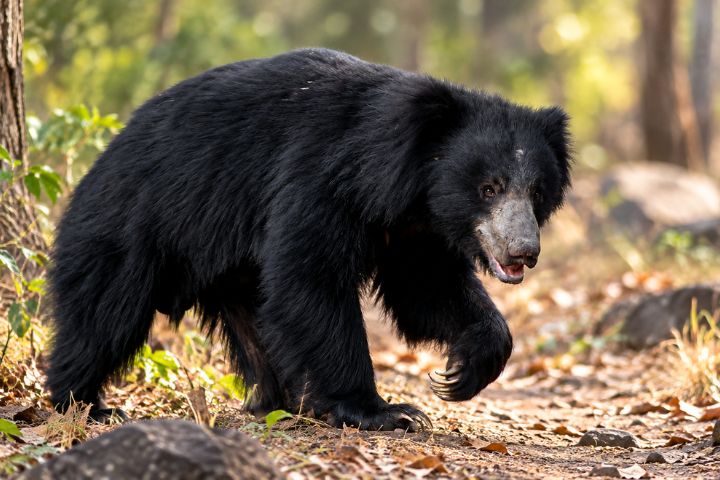
Imagine driving through the dry forests of Tadoba National Park when your safari vehicle suddenly comes to a stop. Your guide points towards the bushes, and slowly, a shaggy black animal emerges from the vegetation.
It is not a tiger. It is a sloth bear.
For many travellers, seeing a sloth bear in the wild can be one of the most unexpected moments of a Tadoba safari. While tigers often receive most of the attention, Tadoba’s forests are home to a fascinating variety of wildlife, and the sloth bear is one of its most intriguing residents.
The Indian sloth bear, scientifically known as Melursus ursinus, is also one of the most misunderstood. Its powerful build, long claws and unusual appearance can make it look intimidating. However, understanding its behaviour, diet and relationship with the forest gives you a very different perspective on this remarkable animal.
Why Is Tadoba National Park Important for Sloth Bears?
Tadoba National Park, part of the Tadoba-Andhari Tiger Reserve in Maharashtra, is known for its dry deciduous forests and diverse wildlife. The landscape supports several species of mammals, birds and reptiles, with the tiger being its most famous resident.
Sloth bears are another important part of this ecosystem. They use the forest for food, shelter, and movement, and their behaviour is closely connected to the availability of natural resources.
Unlike a zoo or wildlife enclosure, there is no fixed place where you can expect to find a sloth bear. They move through the forest according to their needs, which makes every sighting unpredictable.
This unpredictability is exactly what makes a Tadoba wildlife safari so exciting. You never quite know what the forest is going to reveal.
What Does a Sloth Bear Look Like?
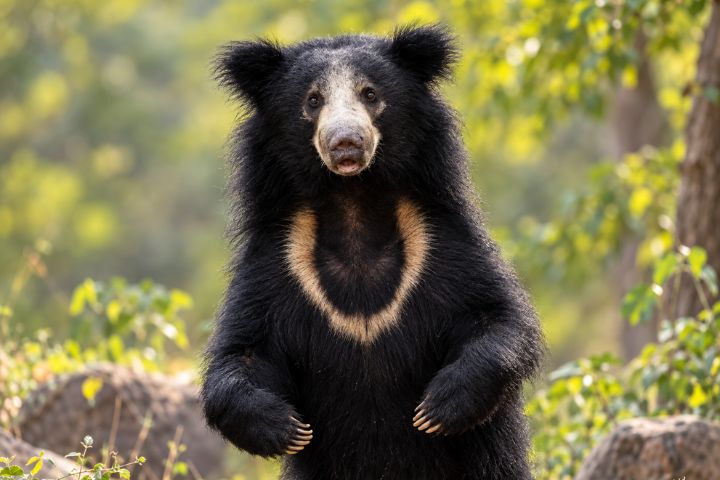
The Indian sloth bear has a distinctive appearance that makes it relatively easy to recognise during a safari.
It has a long, shaggy black coat, a pale muzzle, and a characteristic white or cream-coloured marking on its chest. Its long claws are particularly noticeable and are an important adaptation for finding food.
The sloth bear’s name can also be confusing. Despite the name, it is not related to the tree-dwelling sloths found in the Americas.
The species gets its common name from observations of its unusual appearance and movements. Today, it is recognised as a unique bear species native to the Indian subcontinent.
What Do Sloth Bears Eat?
One of the most interesting things about sloth bears is their diet.
Although they are powerful animals, they are not primarily meat-eaters. Sloth bears are particularly well adapted to feeding on insects and also consume a variety of plant-based foods.
Their diet can include:
- Termites and ants
- Fruits
- Honey
- Other naturally available insects and plant foods
Their long claws help them break into termite mounds and other places where insects are hidden. Their specialised lips are also useful when feeding on termites and ants.
Watching a sloth bear search for food can therefore offer a fascinating glimpse into how wildlife interacts with the forest floor.
How Do Sloth Bears Behave in the Wild?
Sloth bears are generally solitary animals, although their behaviour can vary depending on factors such as food availability, season and individual circumstances.
They have an excellent sense of smell and spend considerable time searching for food. Their movements can take them through different parts of their habitat as they look for insects, fruit and other sources of nourishment.
For safari visitors, it is important to remember that wild animals do not follow a predictable script.
A sloth bear may be walking along a forest track, feeding in vegetation or disappearing into dense cover before you have a chance to take a photograph. A sighting may last only a few seconds.
That is part of the magic of wildlife tourism.
Are Sloth Bears Dangerous?
One of the most frequently asked questions about sloth bears in Tadoba is whether they are dangerous.
The answer requires some context. Sloth bears are strong wild animals and can be dangerous if they feel threatened, surprised or cornered. This is why visitors should never treat a bear sighting as an opportunity to get closer.
At the same time, it is misleading to portray every sloth bear encounter as an inevitable attack. Like other wild animals, their behaviour depends on the situation.
During a Tadoba safari, the safest approach is to remain inside the vehicle and follow the instructions of your guide and naturalist.
If you encounter a sloth bear:
- Maintain a safe distance from the animal.
- Remain inside the safari vehicle.
- Keep your voice low and avoid unnecessary disturbance.
- Never attempt to approach or follow the animal.
- Never feed or provoke wildlife.
- Follow the instructions of your safari guide and forest authorities.
A responsible wildlife experience means allowing the animal to continue its natural behaviour without interference.
Where Can You See Sloth Bears in Tadoba?
Sloth bears can occur in suitable habitats throughout the Tadoba-Andhari landscape, but there is no guaranteed location where visitors will definitely see one.
This is important to understand before planning a Tadoba National Park safari specifically around sloth bear sightings.
Wild animals move according to food availability, weather, temperature, shelter, and other natural conditions. Your naturalist and driver may understand the forest and help interpret signs of wildlife activity, but they cannot control where an animal chooses to go.
A responsible safari operator should never promise a guaranteed sloth bear sighting.
Instead, approach your safari with an open mind. You may set out hoping to see a sloth bear and return having watched a tiger, gaur, dhole, sambar, or an incredible variety of birds.
When Is the Best Time to See a Sloth Bear in Tadoba?
There is no particular day or safari that can guarantee a sloth bear sighting.
Wildlife activity changes with factors such as temperature, food availability, water and seasonal conditions. Different animals may also become more or less active at different times.
If you are planning a visit to Tadoba National Park, it is therefore better to plan for the overall wildlife experience rather than choosing a trip solely around one species.
The sloth bear may be the highlight of your safari, but it could just as easily be an unexpected encounter that happens while you are searching for something else.
What Should You Do If You Spot a Sloth Bear?
Seeing a sloth bear for the first time can be an exciting experience. The best response, however, is to stay calm and allow your guide to manage the encounter.
Avoid shouting, making noises or asking the driver to move closer. The goal should be observation rather than interaction.
If the bear is walking across the road, feeding nearby or moving through vegetation, simply watch from a safe distance. Give it the opportunity to move away naturally.
Photography is part of many safari experiences, but getting the perfect photograph should never take priority over wildlife safety.
Sloth Bears and Tigers Share the Same Forest
Tadoba is internationally recognised for its tiger habitat, but focusing only on tigers can mean missing much of what makes this forest special.
The sloth bear and tiger have very different ecological roles. Tigers are large carnivorous predators, while sloth bears have a varied diet with a strong reliance on insects and other natural foods.
Both are examples of how different species can occupy the same broader ecosystem.
For this reason, a Tadoba safari should not simply be viewed as a search for a tiger. It is an opportunity to observe an entire forest ecosystem and the many species that depend upon it.
| Wildlife experience | What makes it interesting |
| Sloth bear sighting | Observing an unusual and specialised forest animal |
| Tiger sighting | Seeing one of India’s most iconic predators |
| Gaur encounter | Watching one of India’s largest wild bovines |
| Dhole sighting | Observing India’s wild dog in its natural habitat |
| Birdwatching | Discovering the remarkable diversity of Tadoba’s birdlife |
Planning Your Tadoba National Park Safari
A little preparation can make your wildlife experience more enjoyable, particularly if this is your first visit to Tadoba.
At Jungle Bucket List, we help travellers plan their wildlife experiences and offer Tadoba National Park packages for visitors who want to explore the reserve and its diverse wildlife.
Whether your primary interest is tigers, sloth bears, birds or simply experiencing the forest, it is important to approach a safari with realistic expectations.
Wildlife sightings are never completely predictable. That uncertainty is not a weakness of a safari it is what makes seeing an animal in its natural habitat so special.
Before entering the forest, remember to follow the applicable safari regulations and listen carefully to your guide and naturalist. Carry suitable clothing for the season, keep your camera or binoculars ready, and most importantly, respect the wildlife around you.
The Sloth Bear Is an Important Part of Tadoba’s Story
When people talk about Tadoba National Park, the conversation often starts with tigers. But the forest has a much bigger story to tell.
The sloth bear represents one of the lesser-understood sides of Tadoba’s wildlife. Its unusual appearance, specialised diet and unpredictable behaviour make an encounter with one a memorable part of a safari.
For travellers, the real reward is not simply ticking an animal off a list. It is learning to observe wildlife on its own terms.
If you are planning your next wildlife adventure, Jungle Bucket List offers Tadoba National Park packages for travellers who want to explore the forests, wildlife and unique experiences of Tadoba in Maharashtra.
Because sometimes, the most memorable safari moment is not the animal you came looking for it is the one the forest unexpectedly gives you.
Frequently Asked Questions About Sloth Bears in Tadoba
Are sloth bears dangerous in Tadoba National Park?
Sloth bears are powerful wild animals and can be dangerous if they feel threatened or surprised. Visitors should maintain a safe distance, remain inside the safari vehicle and follow the instructions of their guide and naturalist.
Can you see sloth bears during a Tadoba safari?
Yes. Sloth bears are part of the wildlife found in the Tadoba landscape. However, sightings cannot be guaranteed because they move naturally through their habitat according to food, weather and other conditions.
What do sloth bears eat in Tadoba?
Sloth bears feed on termites, ants, fruits, honey and other naturally available foods. Their claws and specialised lips help them access insects and food sources that are difficult for many other animals to reach.
Where can you see sloth bears in Tadoba?
Sloth bears can occur in suitable habitats across the Tadoba-Andhari landscape. There is no single location where a sighting is guaranteed, so visitors should rely on their safari guide and naturalist while exploring the forest.
What should you do if you encounter a sloth bear?
Stay inside the safari vehicle, remain calm and maintain a safe distance. Do not approach, feed, call or provoke the animal. Following the instructions of your safari guide is the safest approach.