
A Classroom Without Walls: Life Lessons from Wild Tigers at Tadoba National Park

Most classrooms have four walls, a blackboard, and a teacher. But some of life’s greatest lessons are taught beneath towering teak trees, beside silent waterholes, and along dusty forest trails.
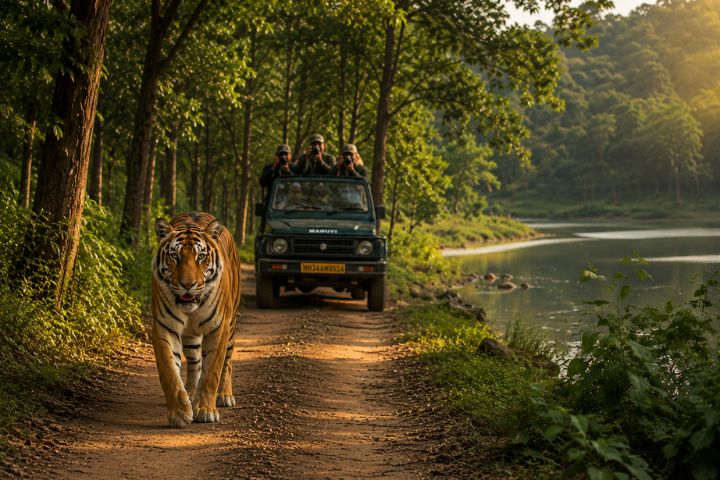
Imagine standing in the heart of Tadoba National Park just after sunrise. The forest is alive with birdsong, langurs call from the treetops, and every rustle makes you wonder what lies ahead. Somewhere nearby, a tiger walks unseen. You may never catch a glimpse of it, yet its presence is felt everywhere.
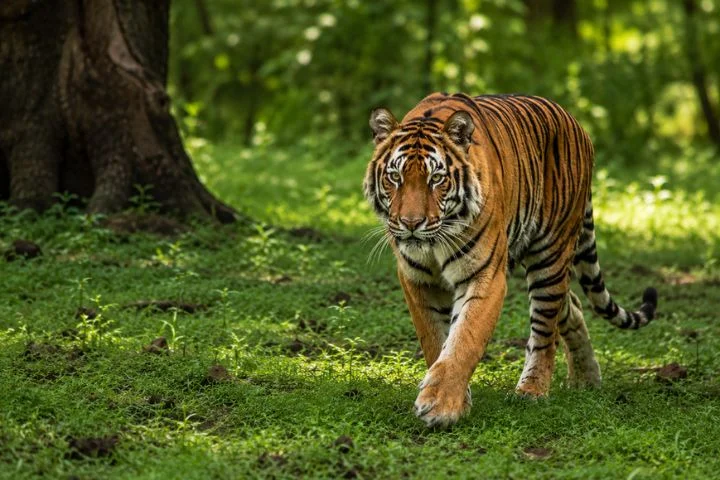
Most people think a tiger is simply the king of the jungle. In reality, a tiger is far more than that it’s the invisible force that keeps an entire ecosystem in balance. Protecting a tiger means protecting thousands of other species, healthy forests, clean water, and even the communities that depend on nature.
Welcome to nature’s greatest classroom.
Why the Tiger Is the Heart of the Forest
A tiger is known as an apex predator, meaning it sits at the very top of the food chain. But its importance goes far beyond hunting. Scientists also describe tigers as a keystone species because their presence supports the health of countless plants and animals.
Think of a stone arch. Remove the center stone, and the entire structure collapses. The tiger plays a similar role in the forest.
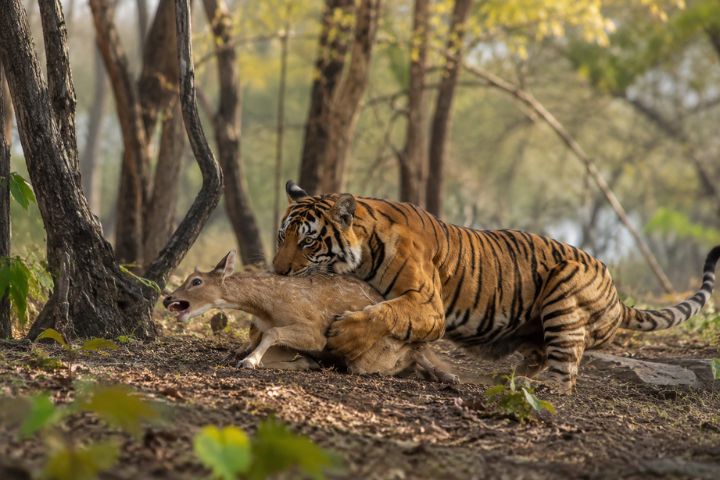
By controlling populations of deer, wild boar, and other herbivores, tigers prevent excessive grazing. This allows young trees, shrubs, and grasses to grow, creating shelter and food for birds, insects, reptiles, and smaller mammals.
The tiger may hunt alone, but its influence touches every corner of the jungle.
One Hunt, Dozens of Beneficiaries
One of the most fascinating lessons from the wild is that a tiger never feeds only itself.
After making a kill, the tiger eats first. Once it moves away, nature begins its remarkable recycling process.
A single carcass can provide food for:
- Jackals
- Foxes
- Vultures
- Crows
- Raptors
- Beetles
- Ants
- Flies and their larvae
- Microorganisms and fungi
Even the smallest insects play an essential role by breaking down leftover remains and returning nutrients to the soil. Those nutrients nourish plants, which in turn feed herbivores, completing the cycle of life.
Nothing in the forest goes to waste. While humans often view leftovers as waste, nature sees them as opportunity. Every meal a tiger catches becomes a shared resource for dozens of other living organisms.
How Tigers Help Forests Grow
Healthy forests don’t exist by accident. They depend on balance.
Without predators like tigers, herbivore populations can grow rapidly. Too many deer or wild boar feeding on young plants prevent forests from regenerating naturally.
Over time, this leads to:
- Loss of young trees
- Reduced plant diversity
- Soil erosion
- Poor habitat for birds and insects
- Declining biodiversity
Healthy forests do much more than provide homes for wildlife. They store carbon, recharge groundwater, improve air quality, and help regulate local temperatures. While rainfall depends on many climatic factors, thriving forests play an important role in maintaining the water cycle and creating resilient ecosystems.
Protecting the tiger ultimately helps protect these forests and the many benefits they provide to people.
The Tiger: An Unseen Guardian
Across India, forests that support tiger populations often receive stronger conservation attention. Protected areas such as Tadoba National Park are managed by forest departments, supported by local communities, conservation organizations, and wildlife laws that safeguard these habitats.
Historically, people also treated dense tiger forests with caution, which sometimes reduced human pressure on these landscapes. Today, however, conservation depends on much more than fear. It relies on scientific management, responsible tourism, community participation, and respect for wildlife.
Every visitor who chooses ethical wildlife tourism contributes to this larger effort by recognizing that forests are worth protecting not exploiting.
Lessons Wild Tigers Teach Us
A safari is more than an adventure. It is an opportunity to observe life through a different lens.
Patience
A tiger may spend hours stalking its prey before making a single move. Success often comes from waiting for the right moment rather than rushing.
Focus
While the forest is full of distractions, a hunting tiger remains completely focused on its objective. In our fast-paced world, this quiet concentration is a lesson worth remembering.
Balance
Unlike humans, tigers don’t hunt for sport or excess. They take what they need and allow nature to recover. The forest thrives because nothing is wasted.
Quiet Confidence
Despite their immense strength, tigers spend much of their lives moving silently through the jungle. True power doesn’t always need to announce itself.
Respect
Every animal understands boundaries and coexistence. Observing wildlife reminds us that respecting space both for nature and for each other is essential for harmony.
Why Children Should Learn Outside the Classroom
Reading about wildlife is valuable, but experiencing a forest firsthand leaves a lasting impression.
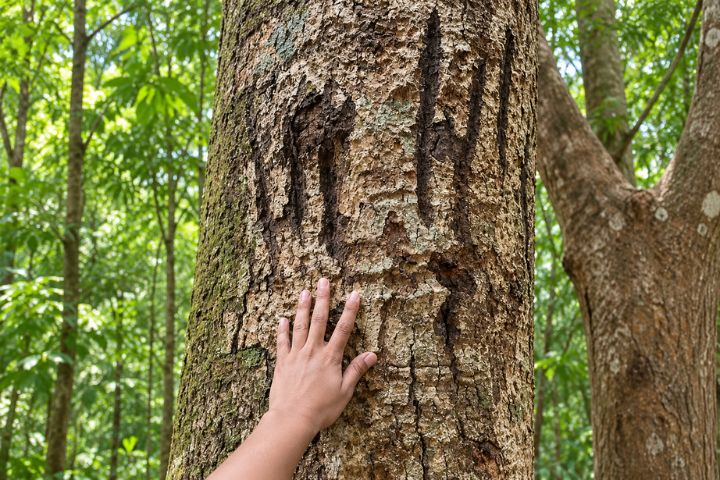
Watching fresh pugmarks on a dusty trail, hearing a distant alarm call from a spotted deer, or seeing a giant crested serpent eagle glide overhead teaches lessons no textbook can fully capture.
A visit to Tadoba National Park helps children and adults alike understand concepts such as biodiversity, food chains, conservation, and ecological balance through real-world experiences.
Nature has an extraordinary way of making learning unforgettable.
Tadoba National Park: A Living Classroom
Among India’s tiger reserves, Tadoba National Park stands out as one of the finest places to witness a healthy forest ecosystem in action.
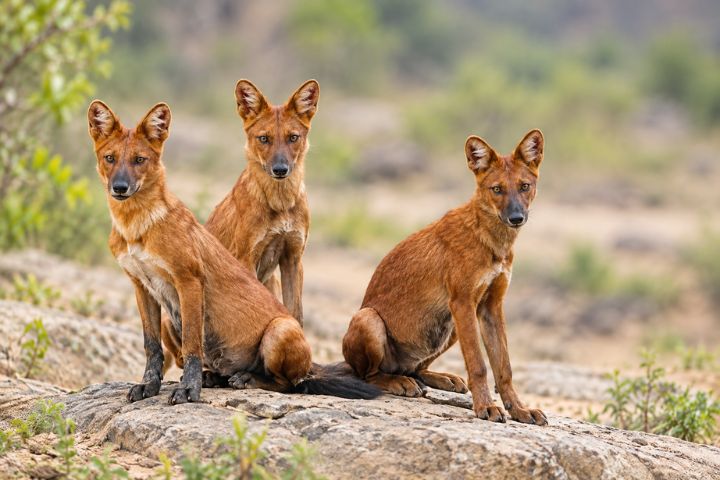
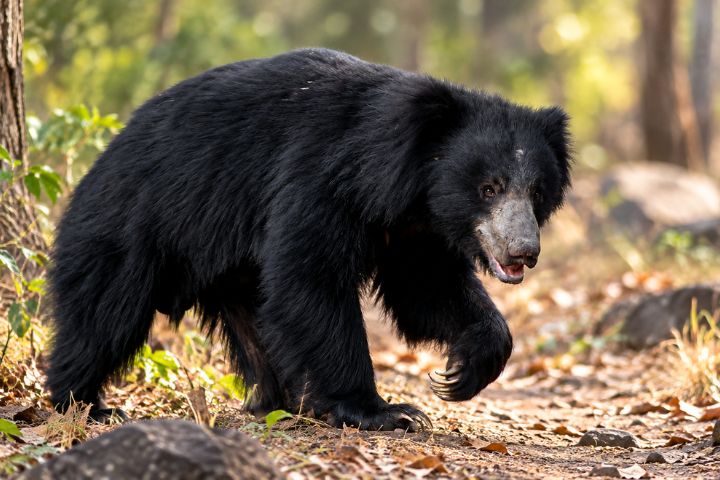
Known for its thriving population of wild tigers, the park is also home to leopards, sloth bears, Indian gaur, wild dogs, crocodiles, hundreds of bird species, and countless insects that quietly sustain the forest.
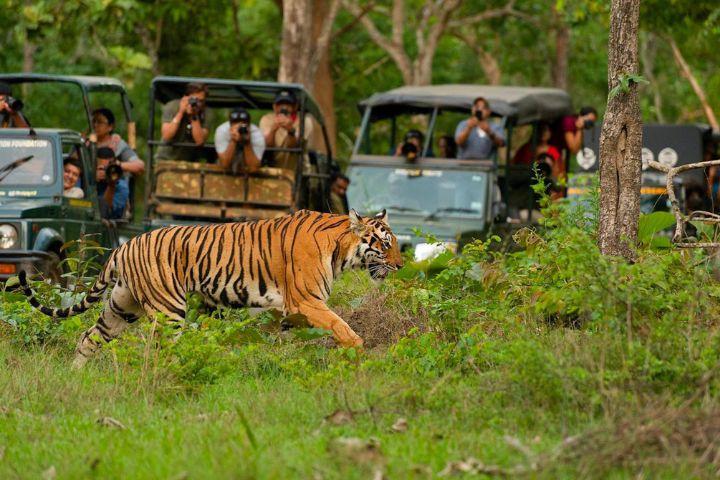
Every safari offers something different. Sometimes the highlight is a tiger crossing the road. Other times, it’s a change in bird calls that reveals a predator nearby or a family of dung beetles demonstrating how every creature has a role to play.
These moments remind us that the forest isn’t built around one species alone it functions because every organism is connected.
If you’re planning to experience this remarkable ecosystem, Jungle Bucket List can help you discover Tadoba National Park through responsible and well-planned wildlife experiences that respect both nature and local communities.
Key Takeaways
| What the Tiger Does | Why It Matters |
| Controls herbivore populations | Prevents overgrazing and supports forest regeneration |
| Supports scavengers through leftover prey | Feeds birds, mammals, insects, and microorganisms |
| Maintains ecological balance | Protects biodiversity and healthy habitats |
| Encourages forest conservation | Helps preserve landscapes that benefit both wildlife and people |
| Inspires responsible tourism | Creates awareness and support for conservation efforts |
Learning to Protect What Teaches Us
A tiger is far more than a magnificent animal to photograph.
It is a guardian of forests, a protector of biodiversity, and a reminder that every living creature has a purpose.
When we protect tigers, we aren’t just saving a single species. We are safeguarding forests that store carbon, rivers that supply water, birds that pollinate ecosystems, insects that recycle nutrients, and future generations who deserve to experience the wild as it was meant to be.
The next time you step into Tadoba National Park, don’t just look for a tiger. Look for the countless stories it quietly writes across the forest every single day. Because the greatest classroom has never needed walls it has always been waiting in the wilderness.
Frequently Asked Questions
Q1. Why are tigers important to the ecosystem?
Answer: Tigers are apex predators and keystone species that help regulate herbivore populations, allowing forests to regenerate naturally and supporting biodiversity.
Q2. Why is Tadoba National Park famous?
Answer: Tadoba National Park is one of India’s premier tiger reserves, renowned for its healthy tiger population, diverse wildlife, and excellent safari experiences.
Q3. What happens if tigers disappear?
Answer: Without tigers, herbivore populations may increase unchecked, leading to overgrazing, habitat degradation, reduced biodiversity, and weaker forest ecosystems.
Q4. How do tiger kills benefit other animals?
Answer: After a tiger feeds, the remaining carcass provides food for scavengers such as jackals, vultures, crows, insects, and microorganisms, ensuring that nutrients are recycled back into the ecosystem.