



The Villages That Moved Out of Tadoba: The Human Story Behind Wildlife Conservation

When you think of Tadoba, you probably picture a tiger emerging from the dry forest, a herd of gaur crossing a safari track, or a jeep waiting quietly beside a waterhole.
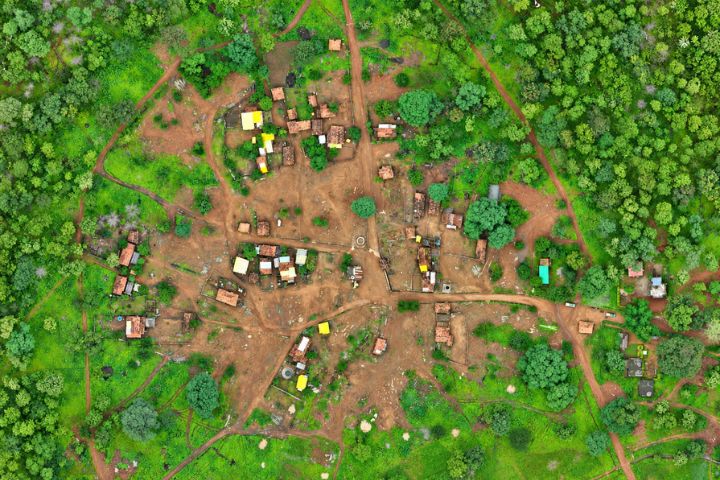
But behind these wildlife experiences is a lesser-known story involving the people who once lived within the forests of Tadoba-Andhari Tiger Reserve.
Several villages that were once part of the reserve’s core landscape have been relocated as part of conservation efforts. For wildlife, this has meant less human activity and more space for habitat management. For the people who moved, however, it meant leaving behind homes, farmland, memories, and a familiar way of life.
So, which villages were relocated from Tadoba, why did they move, and what happened to the land afterwards?
Let’s look at the human story behind one of Maharashtra’s most important tiger conservation landscapes.
Why Were Villages Relocated From Tadoba?
Tadoba-Andhari Tiger Reserve is one of Maharashtra’s most important habitats for tigers and other wildlife. Its forests, grasslands, and water sources support species including tigers, leopards, sloth bears, gaur, sambar, and chital.
For generations, however, people also lived within this landscape.
Villages inside a protected forest can create a complicated relationship between communities and wildlife. Agricultural fields, livestock, and daily human activity can overlap with areas used by wild animals. This can increase the possibility of human-wildlife conflict and create additional pressure within important wildlife habitat.
Relocating villages from the core area is therefore intended to reduce human disturbance and allow the land to be managed more extensively for wildlife conservation.
But there is an important point that often gets missed.
A village is not just a collection of houses.
It is a community, a livelihood, and a place where generations of people may have built their lives. Moving outside the forest can bring better access to roads, schools, healthcare and other facilities, but it can also mean adapting to an entirely new environment.
That is what makes Tadoba’s relocation story much more complex than simply saying that villages were “moved for tigers.”
Which Villages Were Relocated From Tadoba?
According to the official Tadoba information referenced for this article, five villages have been successfully relocated from the core area of the reserve. Rantalodhi is also identified as the remaining village undergoing relocation.
| Village | Relocation information |
| Botezari | 2007 |
| Kolsa | 2007 and 2022 |
| Navegaon (Ramdegi) | 2013 |
| Jamni | 2014 |
| Palsagaon Singru | 2019 |
| Rantalodhi | Relocation in progress |
Botezari was among the earliest villages to be relocated, with 2007 listed as its relocation year. Kolsa is associated with both 2007 and 2022 in the official information, suggesting a more extended relocation history.
Navegaon, also known as Ramdegi, was relocated in 2013, followed by Jamni in 2014 and Palsagaon Singru in 2019.
Rantalodhi represents the continuing chapter of this process. The official Tadoba information states that around 80% of its residents had been relocated when the page was published.
Because relocation is an ongoing administrative process, current figures and status should always be checked with the latest official Tadoba information.
What Did Relocation Mean for the People?
For the residents, relocation meant starting again.
The official Tadoba information describes rehabilitation packages involving cash or land options, with ₹10 lakh and ₹15 lakh figures mentioned in connection with the available packages.
However, compensation is only one part of rehabilitation.
A family that has traditionally depended on agriculture needs more than a new house. It needs a way to earn an income. Children need schools, families need healthcare and communities need roads and other basic infrastructure.
This is why the success of village relocation should be considered from both sides.
For conservation, the objective is to reduce human pressure within the core area. For communities, the objective should be to create the conditions necessary for a secure and sustainable life after relocation.
There is also an emotional side that statistics cannot capture.
People may leave behind ancestral homes, familiar farmland, community spaces and a landscape they have known since childhood. Even if a new settlement offers improved amenities, the connection with the old village does not disappear overnight.
Academic research has examined precisely this tension. Rucha Ghate’s 2005 paper, “Relocation versus Wildlife Preservation,” published in Economic & Political Weekly, looks at the future of residents living in villages within Tadoba-Andhari Tiger Reserve and discusses issues including livelihoods and access to amenities.
What Happened to the Land After the Villages Moved?
Once residents leave, the story moves from rehabilitation to habitat.
The official Tadoba information reports that 910.15 hectares of land were reclaimed for conservation, while a total of 1,780.64 hectares was allotted as part of the relocation program.
Former village areas do not instantly turn into untouched forest. Ecological recovery takes time, and the landscape can go through a gradual process of change as regular human activity decreases.
Agricultural areas, grasslands, and vegetation can become part of the wider habitat managed for wildlife.
This matters because a tiger reserve is not only about tigers.
Animals such as chital, sambar, and gaur form an important part of the ecosystem, providing prey for predators. Water availability, vegetation, habitat connectivity, and protection all contribute to the health of the landscape.
Village relocation is therefore one component of a much larger conservation effort.
It would be inaccurate to say that moving villages alone caused an increase in Tadoba’s tiger population. Tiger numbers are influenced by many factors, including prey availability, habitat quality, protection from poaching, water, and overall wildlife management.
What relocation can do is reduce certain forms of human disturbance and make additional land available for conservation management.
The Numbers Behind Tadoba’s Village Relocation
The scale of the program becomes clearer through the official figures.
According to the Tadoba information reviewed for this article, 2,520 people have been relocated, while 83 people remained in the core area at the time the information was published.
The program also reports 1,780.64 hectares of land allotted, 910.15 hectares reclaimed for conservation, and approximately ₹17.10 crore spent.
These figures show that Tadoba’s conservation story involves much more than protecting wildlife. It requires land management, government resources, rehabilitation planning, and long-term monitoring.
And behind every number are individual families whose lives have changed.
Has Village Relocation Helped Tadoba’s Wildlife?
There is no single answer to this question.
From a conservation perspective, removing settlements from a reserve’s core area can create more space with reduced human activity. This can help wildlife use the landscape with fewer direct interactions with people.
The reclaimed areas can also become part of a larger habitat where prey species and predators interact naturally. But it is important not to oversimplify the results.
A tiger reserve succeeds because several pieces work together: habitat protection, prey availability, anti-poaching measures, water management, ecological restoration, and responsible wildlife tourism. Village relocation is one piece of that much larger picture.
Perhaps the most interesting change is that areas once associated with daily human life can gradually become part of a landscape where wildlife takes center stage.
What Does This Story Mean for a Tadoba Safari?
For most travellers, a visit to Tadoba begins with the hope of seeing a tiger.
And there is something unforgettable about watching a wild tiger move silently through the forest.
But knowing the history of the landscape can make that experience even more meaningful.
When you drive through Tadoba, you are not looking at a forest that exists independently of human history. Some areas have been shaped by agriculture, villages, conservation decisions, and habitat restoration over many years.
Understanding this gives visitors a different perspective.
A safari becomes more than a search for a photograph. It becomes an opportunity to understand how wildlife, forests, and communities are connected.
If you’re planning a visit, Jungle Bucket List can also be your starting point for researching Tadoba safari zones, the best time to visit, accommodation, and safari planning.
Choose responsible tourism operators, follow forest regulations, and remember that wildlife sightings are never guaranteed. The best safari is one where the animals’ wellbeing comes before the photograph.
The Human Story Behind Tadoba’s Wild Landscape
The next time you sit in a safari vehicle waiting for a tiger, remember that the forest around you has a story that goes beyond wildlife.
Some of the land that is now being managed as wildlife habitat was once part of people’s everyday lives. The relocation of villages from Tadoba reflects both the opportunities and challenges that come with protecting India’s remaining wild spaces.
For conservation to be truly successful, protecting wildlife and considering the wellbeing of local communities both matter.
That is what makes Tadoba so interesting.
The tiger may be the reason many travellers visit, but the forest, its people and its history are what make the destination worth understanding.
At Jungle Bucket List, our aim is to help travellers experience Tadoba with that wider perspective, not simply as a place to tick a tiger sighting off a list, but as a remarkable landscape with a story behind every safari.
Frequently Asked Questions
Which villages were relocated from Tadoba?
The official Tadoba information identifies Botezari, Kolsa, Navegaon (Ramdegi), Jamni and Palsagaon Singru as successfully relocated villages. Rantalodhi is identified as the remaining village undergoing relocation.
Why were villages relocated from Tadoba?
The relocation was undertaken as part of conservation efforts to reduce human activity in the core area and create better conditions for wildlife habitat management and potentially reduce human-wildlife conflict.
How many people were relocated from Tadoba?
The official information reviewed for this article reports 2,520 people relocated. Since the relocation program has included ongoing activity, current figures may differ.
Did villagers receive compensation?
Official Tadoba information describes cash or land-based rehabilitation options. The exact benefits can depend on individual circumstances and applicable government rehabilitation provisions.
Did relocation help Tadoba’s tigers?
Relocation can contribute to conservation by reducing human disturbance and making land available for habitat management. However, tiger populations depend on many factors, so relocation should not be considered the sole reason for changes in tiger numbers.